
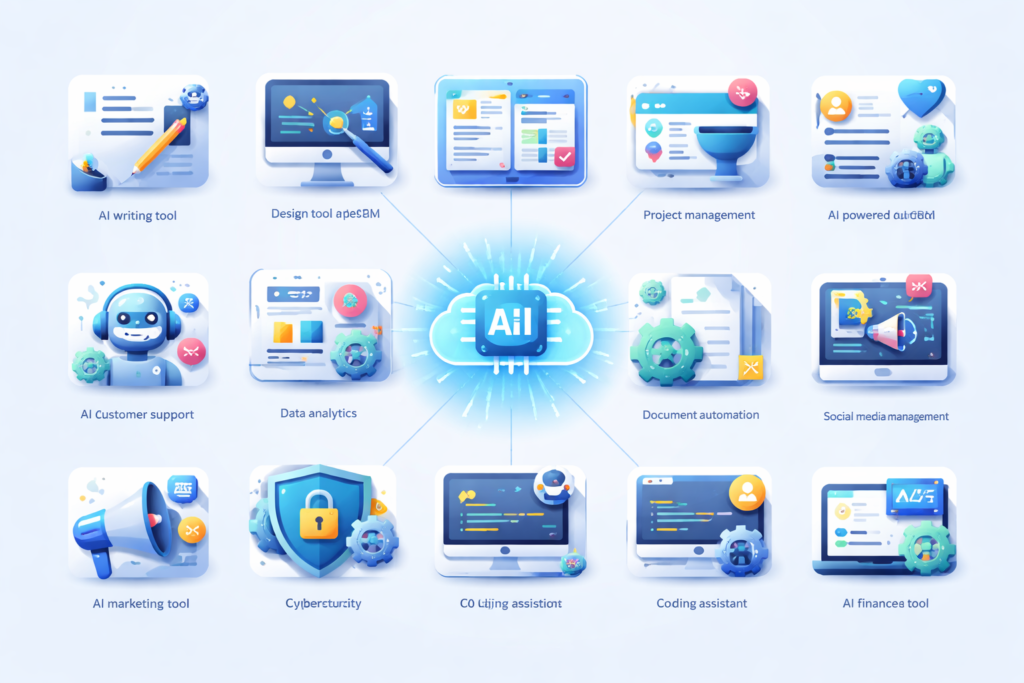
12 AI-Powered SaaS Tools Replacing Traditional Software in 2026 (Complete Guide)
Introduction: The Quiet Replacement of Traditional Software
For decades, businesses relied on traditional software—installed locally, updated manually, and often limited in flexibility. It worked, but it wasn’t efficient. Teams spent hours on repetitive tasks, data was fragmented, and scaling required significant investment.
In 2026, that model is rapidly fading.
A new generation of tools—powered by Artificial Intelligence and delivered through the Software as a Service model—is not just improving workflows; it’s redefining them. These platforms don’t simply assist users—they automate, predict, and in many cases, act on behalf of them.
The shift isn’t dramatic on the surface. It’s happening quietly, tool by tool, process by process. But the impact is profound: traditional software is being replaced by smarter, faster, and more adaptive AI-powered SaaS solutions.
This guide explores 12 of the most impactful tools leading this transformation—and what they mean for businesses moving forward.
Why AI-Powered SaaS Is Replacing Traditional Software
Before diving into the tools, it’s worth understanding why this shift is happening.
1. Automation Over Manual Work
Traditional software requires users to:
- Input data
- Trigger actions
- Manage workflows
AI-powered SaaS tools, on the other hand:
- Automate repetitive tasks
- Learn from patterns
- Execute workflows independently
The result is a significant reduction in manual effort.
2. Real-Time Intelligence
Old systems provide data.
New systems provide insight.
AI tools analyze data in real time, offering:
- Predictions
- Recommendations
- Automated decisions
3. Accessibility and Scalability
Cloud-based platforms allow businesses to:
- Scale quickly
- Access tools anywhere
- Reduce infrastructure costs
4. Better User Experience
Instead of complex dashboards, users now interact through:
- Natural language
- Conversational interfaces
- Simple commands
1. ChatGPT – Replacing Traditional Writing & Support Tools
Traditional tools:
- Word processors
- Basic chat systems
Modern replacement: ChatGPT
What It Does:
- Generates content
- Assists with coding
- Automates customer support
Why It Matters:
Instead of writing everything manually, businesses can:
- Create blogs faster
- Respond to customers instantly
- Improve productivity
2. Notion AI – Replacing Note-Taking & Documentation Tools
Traditional tools:
- Microsoft Word
- Static note apps
What It Does:
- Organizes information
- Generates content
- Summarizes documents
Impact:
Teams move from static documentation to dynamic, intelligent workspaces.
3. Zapier – Replacing Manual Workflow Management
Traditional method:
- Manual task handling
- Repetitive processes
What It Does:
- Connects apps
- Automates workflows
- Eliminates repetitive tasks
Result:
Businesses save time and reduce human error.
4. HubSpot – Replacing Traditional CRM Systems
Traditional CRM:
- Manual data entry
- Limited automation
What It Does:
- Tracks customer interactions
- Automates marketing
- Uses AI for insights
Impact:
Sales and marketing become more efficient and data-driven.
5. Jasper AI – Replacing Copywriting Tools
Traditional approach:
- Hiring writers
- Manual content creation
What It Does:
- Generates marketing content
- Creates ads and blogs
- Optimizes messaging
6. Grammarly – Replacing Manual Editing
Traditional editing:
- Manual proofreading
What It Does:
- Fixes grammar
- Improves tone
- Enhances clarity
7. QuickBooks – Replacing Traditional Accounting Systems
Traditional accounting:
- Spreadsheets
- Manual bookkeeping
What It Does:
- Automates invoicing
- Tracks expenses
- Generates reports
8. Canva – Replacing Traditional Design Software
Traditional tools:
- Complex design software
What It Does:
- Simplifies design
- Uses AI templates
- Enables non-designers
9. Salesforce – Replacing Enterprise Systems
Traditional enterprise software:
- Complex and rigid
What It Does:
- Provides AI insights
- Automates sales
- Improves forecasting
10. Slack – Replacing Email-Based Communication
Traditional communication:
- Email chains
What It Does:
- Real-time messaging
- AI integrations
- Workflow automation
11. Trello – Replacing Traditional Project Tracking
Traditional project management:
- Spreadsheets
- Manual tracking
What It Does:
- Visual task management
- Automation
- Collaboration
12. Shopify – Replacing Traditional Retail Systems
Traditional retail:
- Physical stores
- Manual processes
What It Does:
- Online store management
- AI recommendations
- Sales automation
Key Benefits of AI-Powered SaaS
1. Efficiency
Tasks that took hours now take minutes.
2. Cost Reduction
Less need for large teams.
3. Scalability
Grow without major infrastructure.
4. Better Decision Making
AI provides insights, not just data.
Challenges to Consider
Despite the benefits, there are challenges:
- Data privacy concerns
- Over-reliance on automation
- Learning curve for teams
- Integration issues
The Future of Business Software
Looking ahead, we can expect:
- More AI-native tools
- Increased automation
- Deeper integrations
- Smarter workflows
The line between software and intelligence will continue to blur.
Conclusion: The Shift Is Already Happening
The transition from traditional software to AI-powered SaaS is not a future possibility—it is happening now.
Businesses that adopt these tools gain:
- Speed
- Efficiency
- Competitive advantage
Those that resist may find themselves struggling to keep up.